XVIII Aukcja PREMIUM - 26 września 2026

ORTY part II – Władysław IV Vasa, John II Casimir
On April 30, 1632, after a nearly forty-five-year reign, King Sigismund III Vasa died. Władysław IV Vasa then succeeded him. His reign was relatively poor for Polish numismatics, due to the ban on minting small coins introduced by the Sejm (parliament) in 1627. However, in 1635, dies were designed, and several initial issues of orts, szesyaks, and troyaks were struck at the Bydgoszcz Mint. These coins are unique, as unfortunately, the Sejm did not approve the resumption of small coinage at the time. The only known and preserved examples of these coins are located in the famous St. Petersburg Hermitage Museum. The small diameter of the ort is interesting – 26mm, compared to 30mm for Sigismund III Vasa.
In 1650, at the beginning of the reign of John II Casimir Vasa, the tragic ban on minting small coins from 1627 was lifted. Because of this, the Republic of Poland was flooded with a mass of low-quality foreign coins, and the orta was facing a kind of renaissance.
Renaissance, i.e. minting on a previously unheard of scale, by as many as 9 mints: Bydgoszcz, Wschowa, Poznań, Kraków, Lviv, Vilnius, Gdańsk, Toruń and Elbląg.
Jan Kazimierz's orts were minted on the largest scale in Kraków and Bydgoszcz. To compound this, Poland under this ruler became largely occupied by the Swedes (the Swedish Deluge of 1655-1660), and also invaded by the Cossacks. Occupation and siege coinage joined the regular national minting. As usual, difficult times for the state became incredibly interesting times for numismatics.
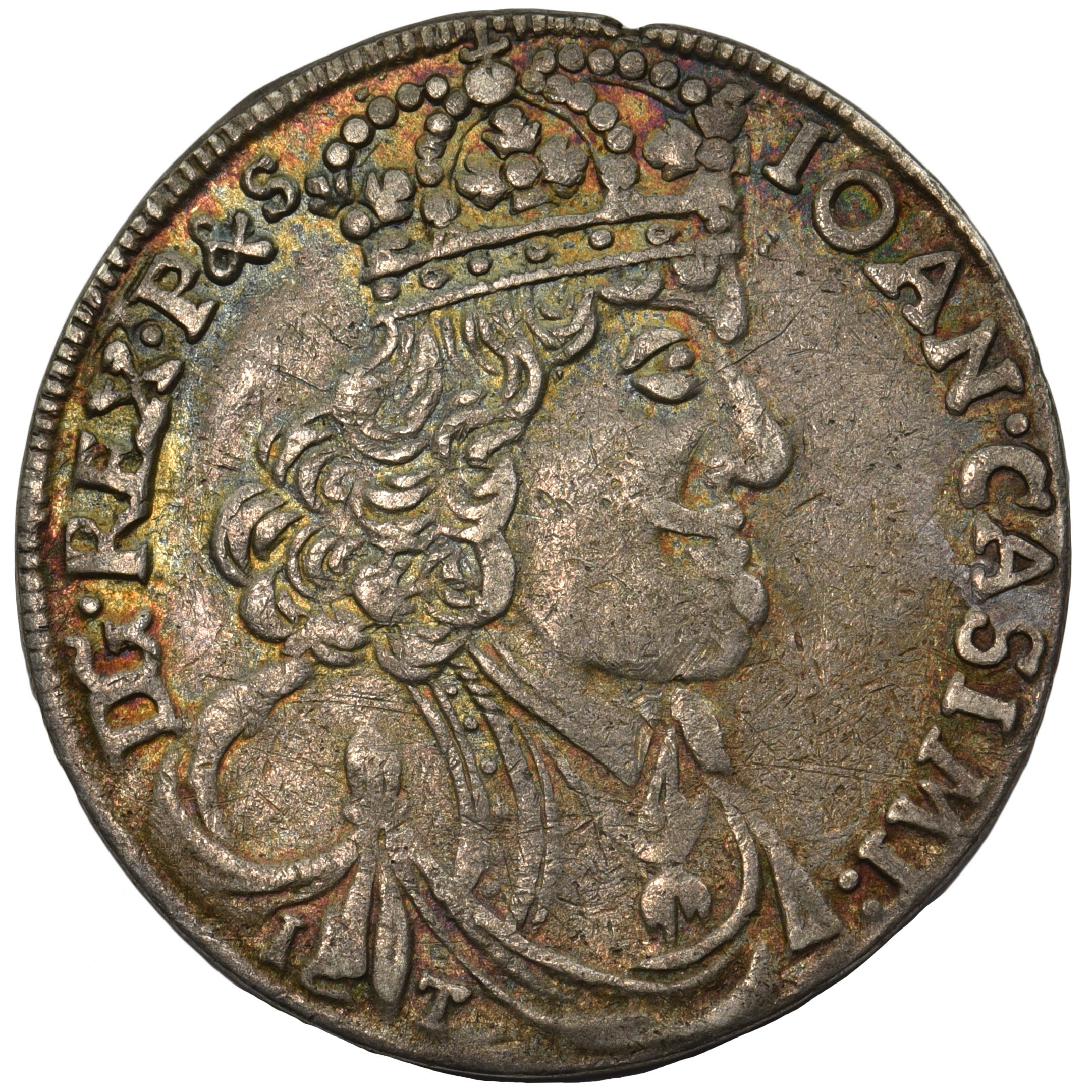
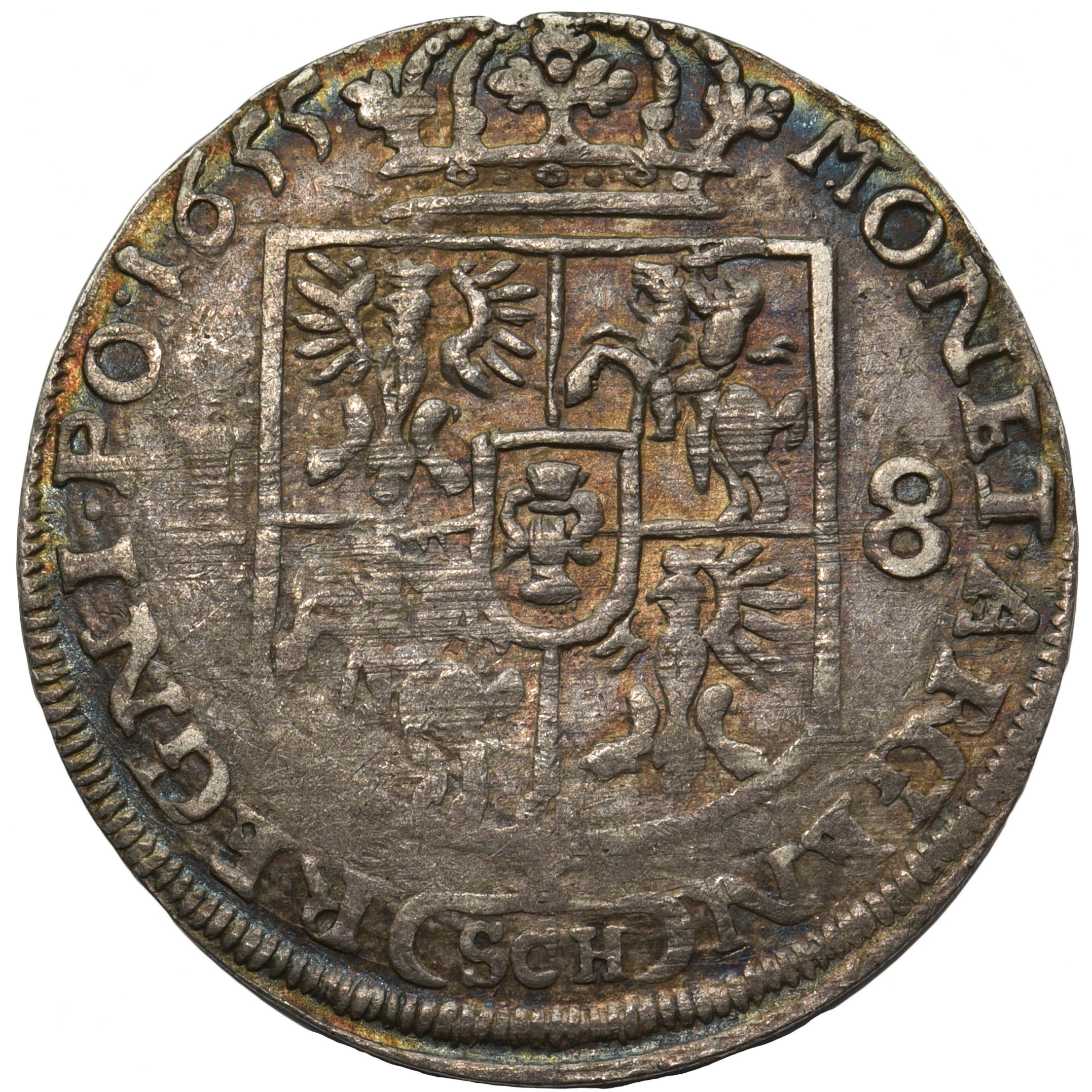
Below are photos of a nice Krakow ort from the first year of minting, 1655, not just any year, because it was the same year when Krakow was besieged by the Swedes.
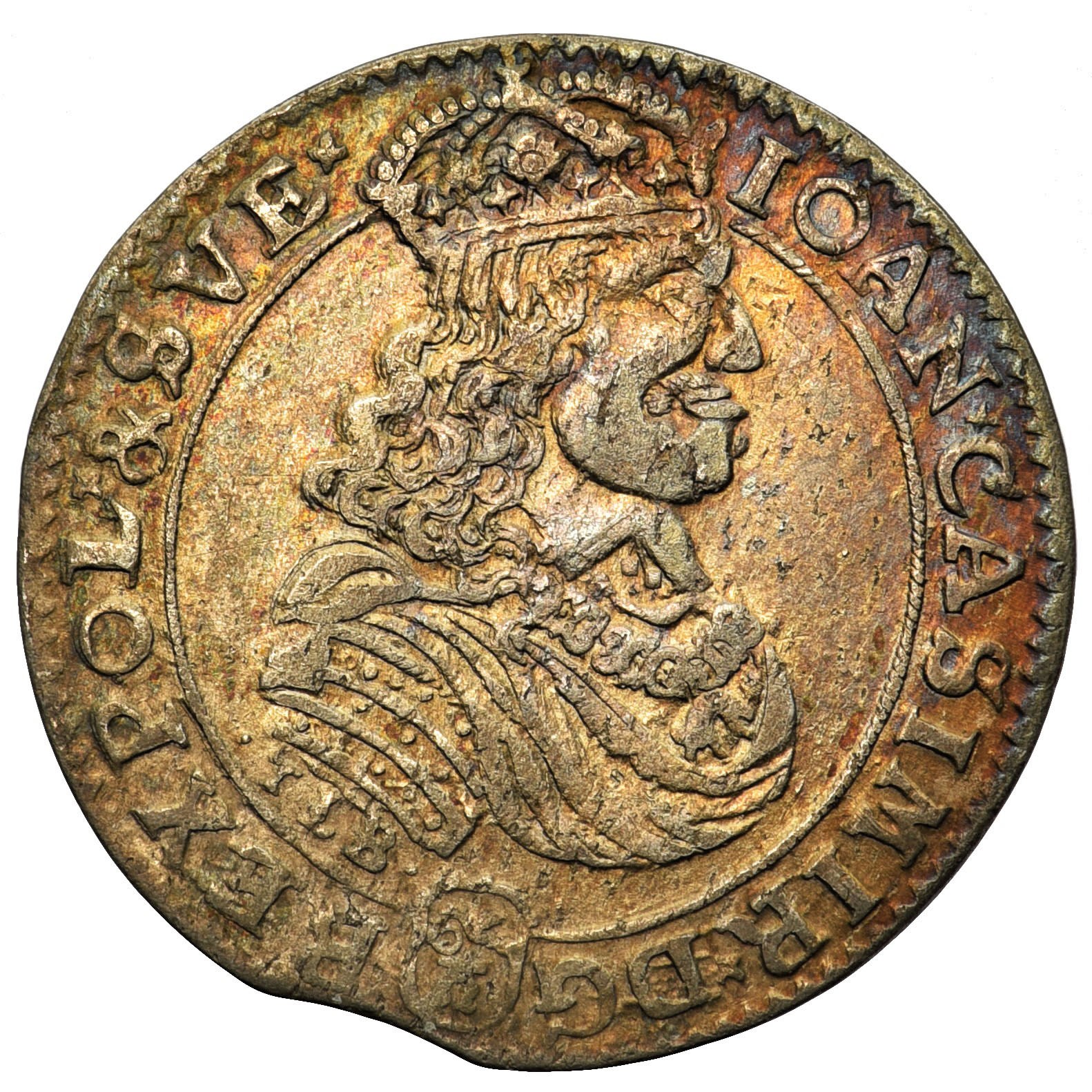
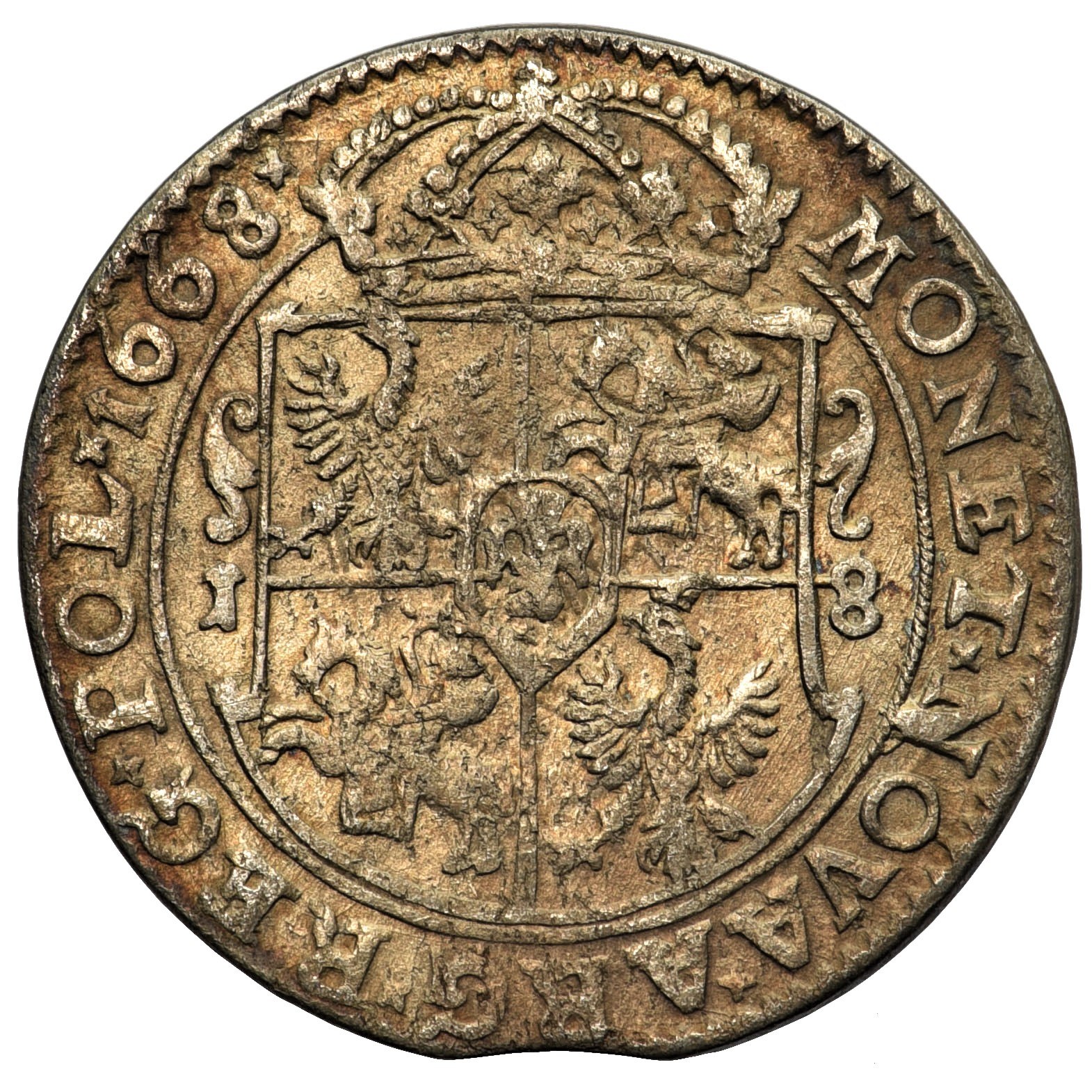
In Bydgoszcz, ort coins were minted in the years 1650, 1651, 1652, 1667, 1668 – those from the 1650s are rare and valued by collectors, and those from 1667 and 1668 are among the most popular and easiest to buy for beginners, they were probably minted in millions of copies, below is a nice example of one of them.
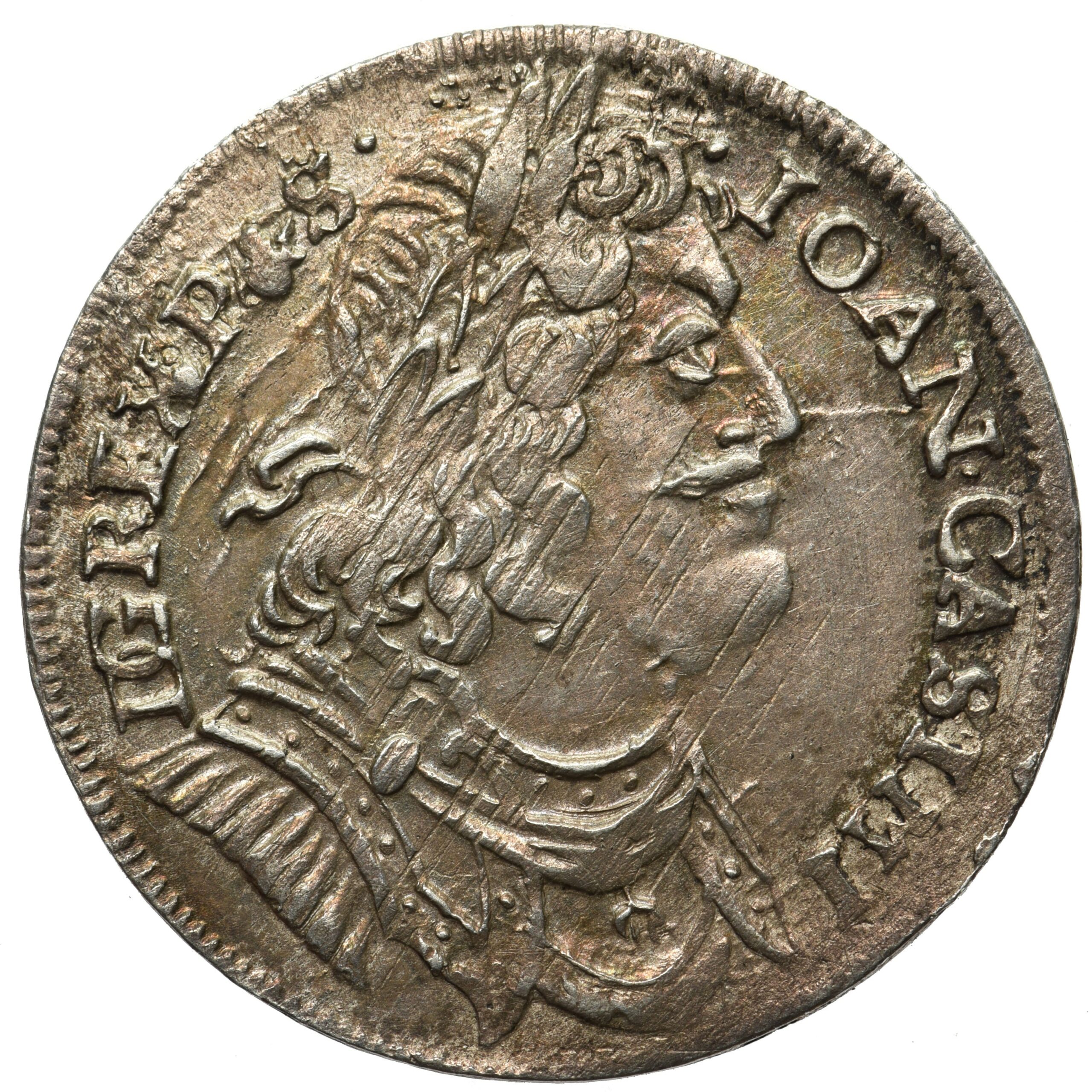
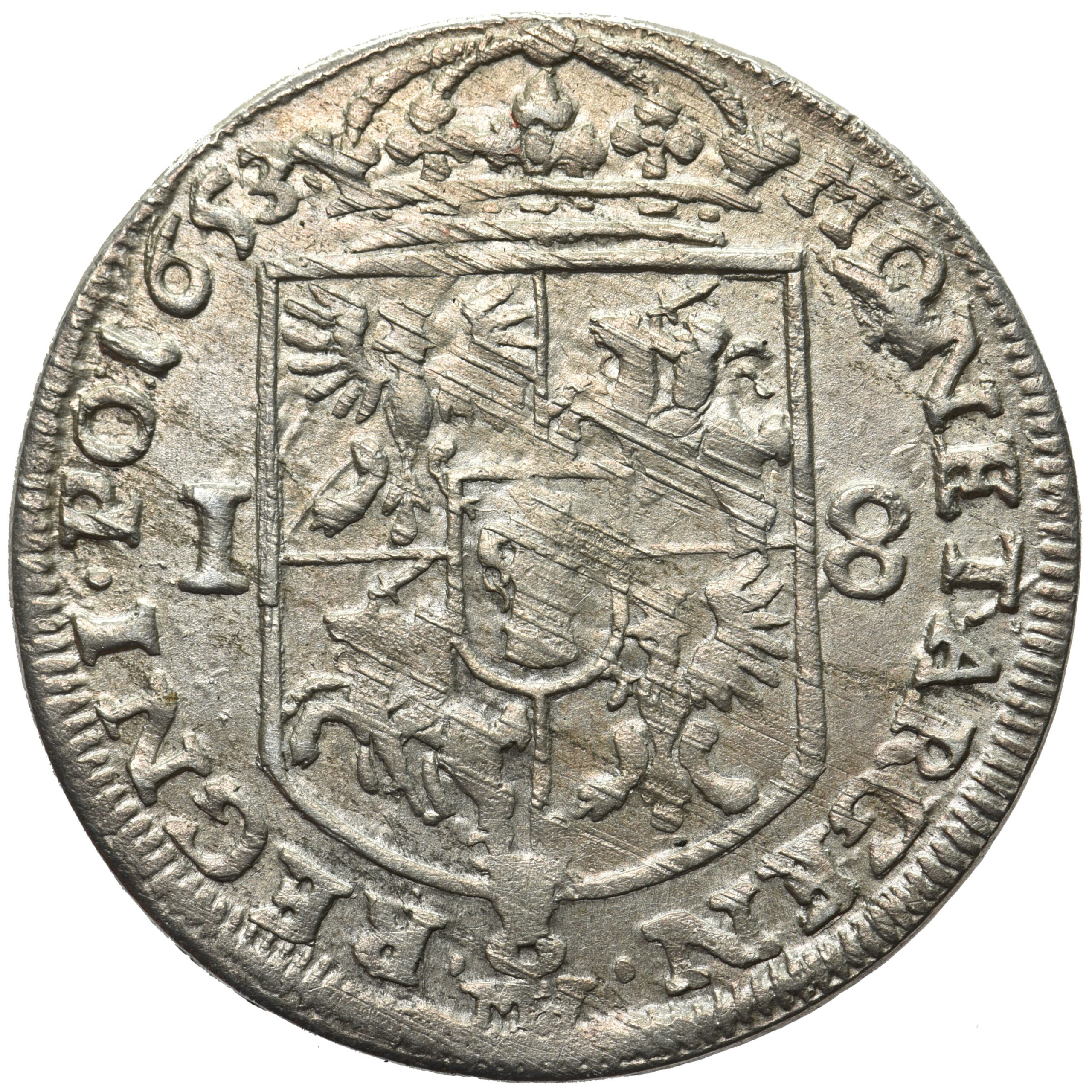
Now we move on to the Wschowa mint, which experienced its heyday during the reign of John II Casimir. Ort coins were minted there continuously from 1650 to 1655 (according to some sources, also in 1656). These are very interesting coins, iconographically different from other ort coins. The obverse features an unusual bust of the king in antique armor covered with a cloak bearing the Order of the Golden Fleece. The monarch's head is adorned not with a crown, as usual, but with a laurel wreath. John Casimir resembles a Roman emperor; such a depiction certainly had a propaganda dimension. Below, a Wschowa ort from 1653 is in a phenomenal state of preservation for these coins.
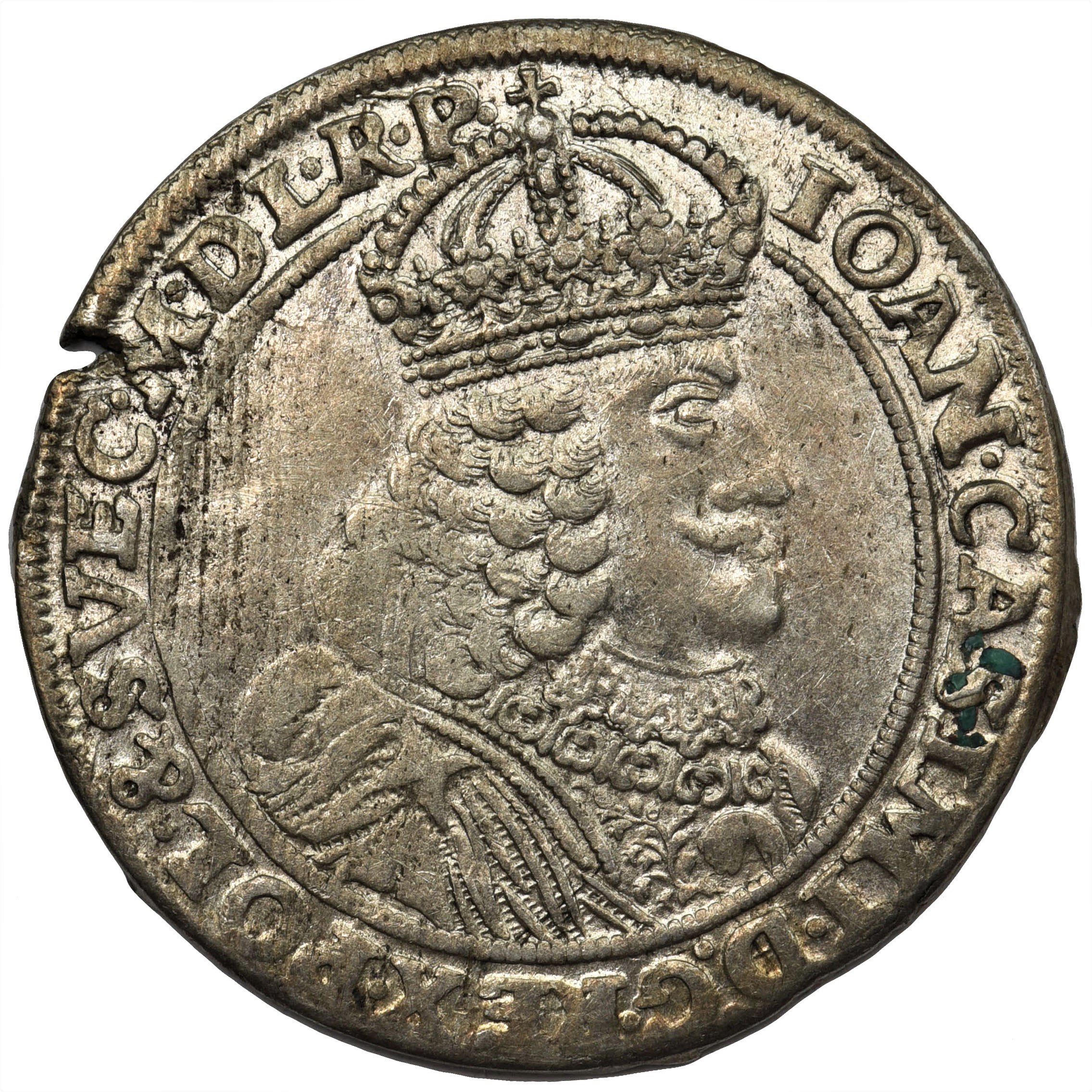
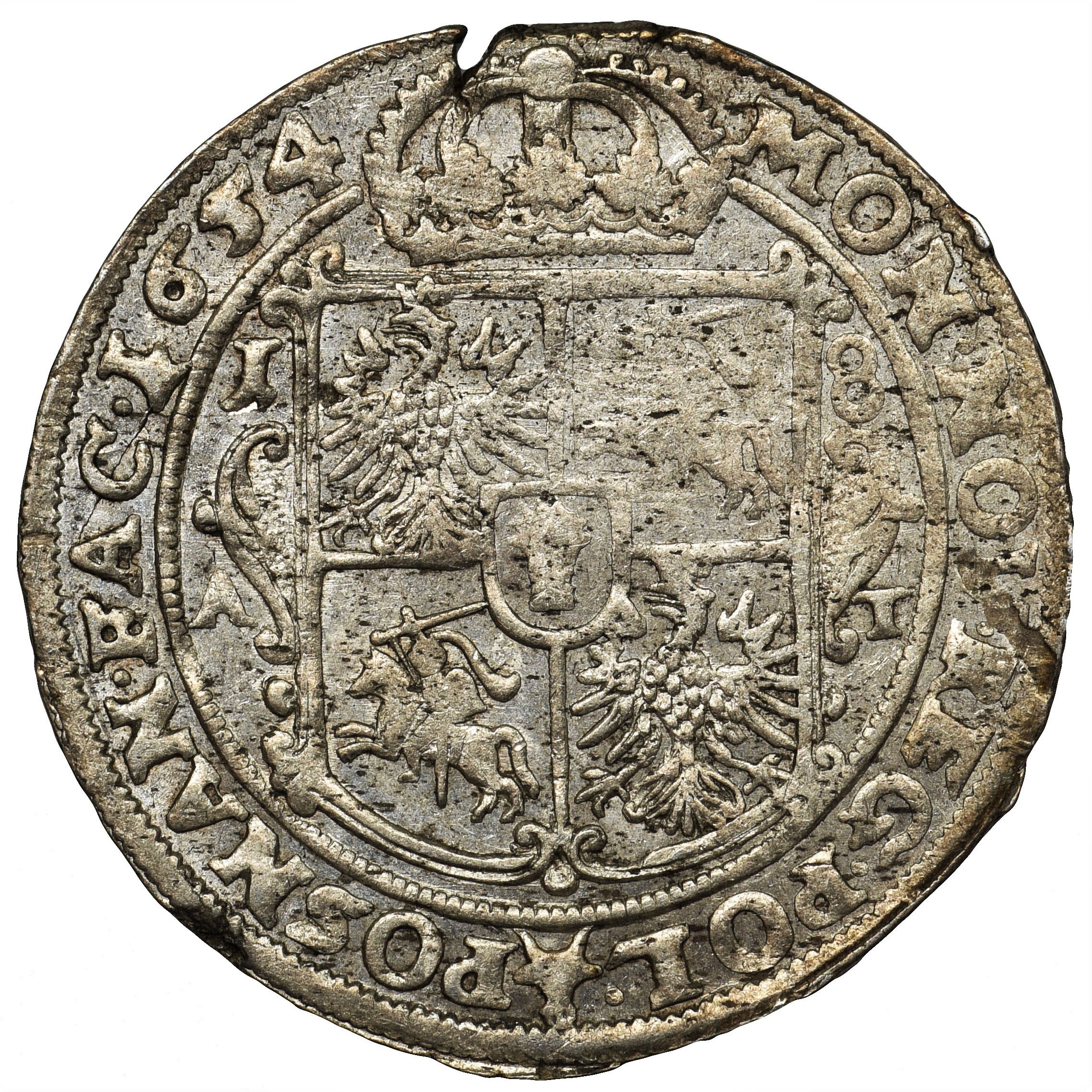
We've briefly discussed Wschowa, so it's time for another crown mint – the Poznań mint. There was also a lot going on there during the reign of John II Casimir. Orts, as was common in those times – 18 groszy coins – were minted there for a long time considering the chaotic times – for nine years (1651-59). Although those from the initial two years of minting are now considered particularly rare and prized, as well as iconographically distinctive. However, as an example of the Poznań ort, I'll show you a more popular, yet equally beautiful coin – the Poznań ort from 1654. The king has a distinctive mane of curly hair. Please take a look:
Through Kraków, Bydgoszcz, Wschowa, and Poznań, we arrive at the last crown mint – Lviv. In my opinion, these are among the most interesting of John Casimir's orts, as they represent an example of wartime coinage, when an inexperienced specialist prepared the coin's die, performed by a simple blacksmith. This was precisely the case in Lviv, which was deprived of mint craftsmen and professional minting equipment in 1656 by the Cossack-Muscovite siege. Below is an example of a coin from this period:
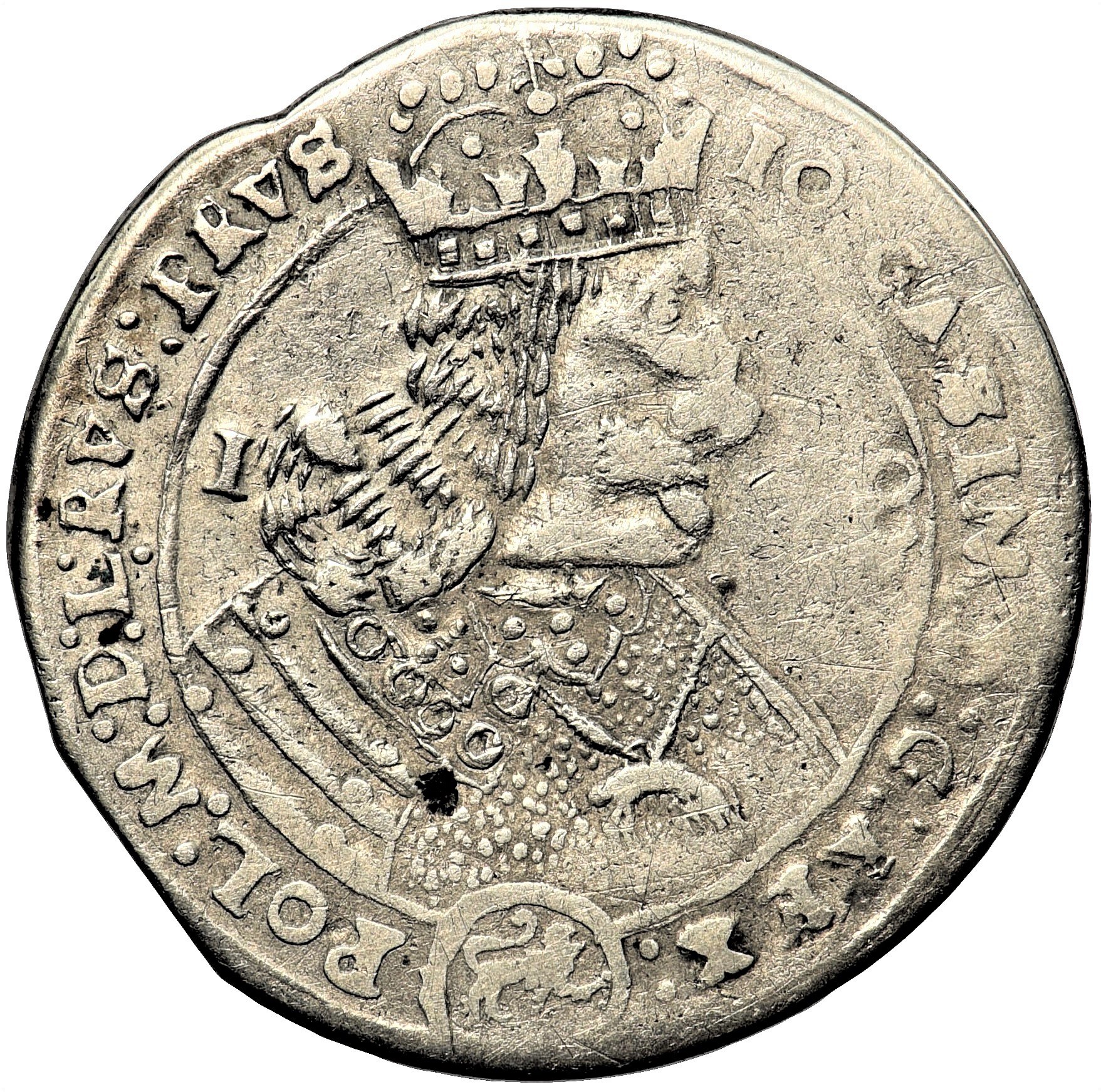
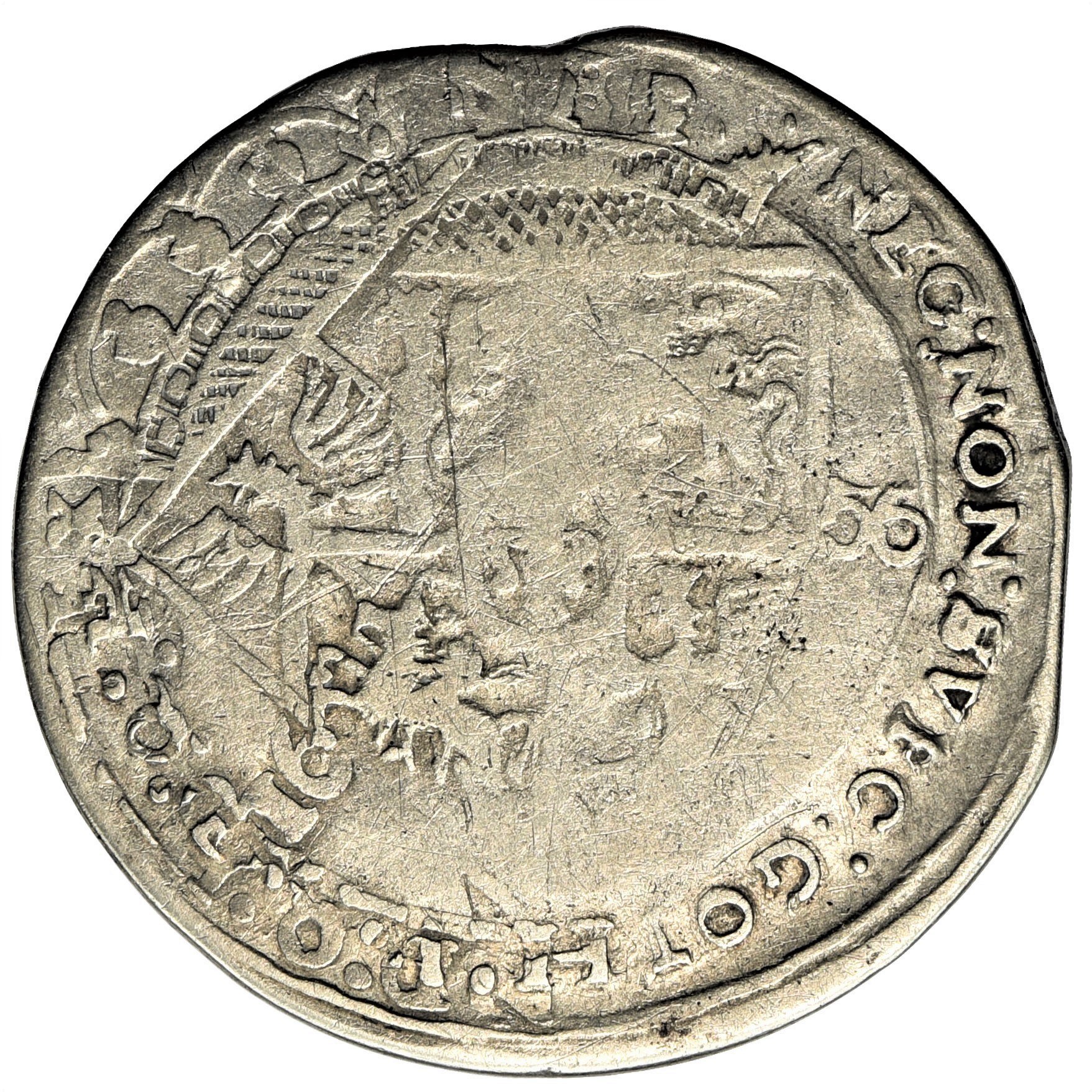
Orts of this characteristically primitive design were minted in 1656 and 1657. Orts in Lviv, this time using professional dies, were minted in 1660, but this was a very small issue, and the rarity of these coins is enormous today.
This brings us to the Lithuanian mint – Vilnius. Although some Lithuanian numismatists attribute these coins to the Oliwa mint, I will maintain that these coins were minted in the capital of the Grand Duchy of Lithuania. The Vilnius ortes were minted in only one year – 1664 – and are among the most valued and sought-after of John Casimir's ortes. The obverse depicts the ruler's bust in a laurel wreath with a rim inscription, while the reverse depicts the Lithuanian Pursuit with a rim inscription.
Concluding this quick discussion of individual mints, I must mention the city mints, i.e. Gdańsk, Toruń and Elbląg.
Of these three mints, the richest is, of course, the coinage of the Hanseatic power, the most important port of Central and Eastern Europe, Gdańsk. Gdańsk ort coins were minted from 1650 to 1667, with a few short breaks. The rarest of these are the first minting year – 1650 – and the latter two. Gdańsk ort coins from the time of John Casimir are characterized by considerable diversity and a greater number of varieties than those from the time of Sigismund. Below is an example of an early Gdańsk ort of John Casimir from 1651:
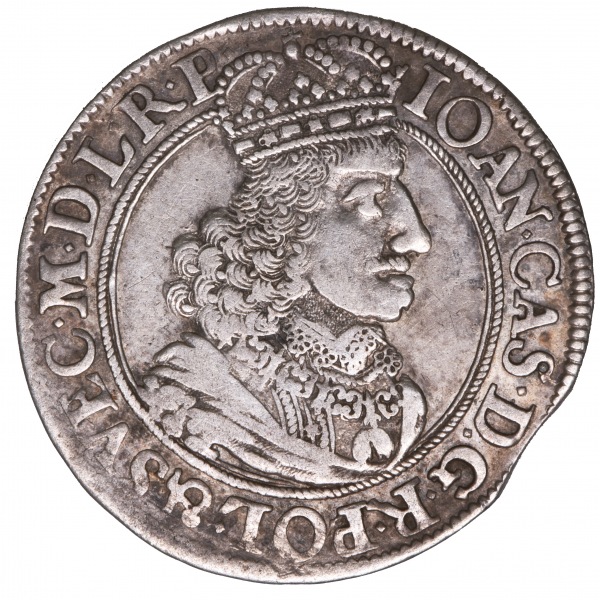
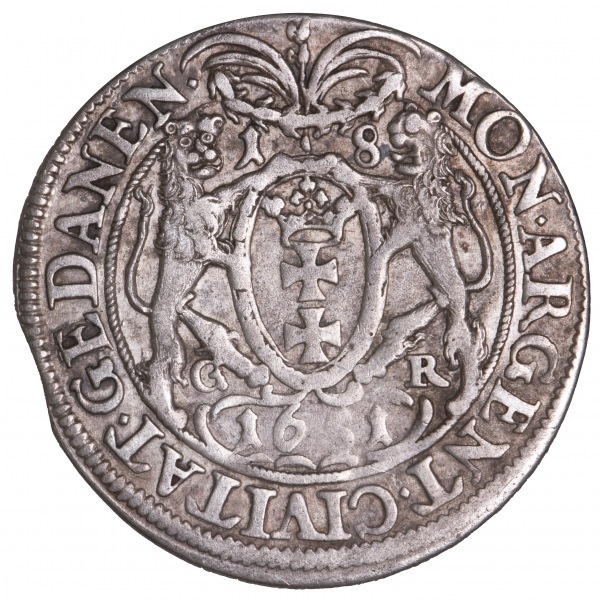
In my opinion, the workmanship is truly exquisite – especially the busts.
Now an example of a later version, a bit less beautiful in my opinion, but still of above-average quality, ort 1662:
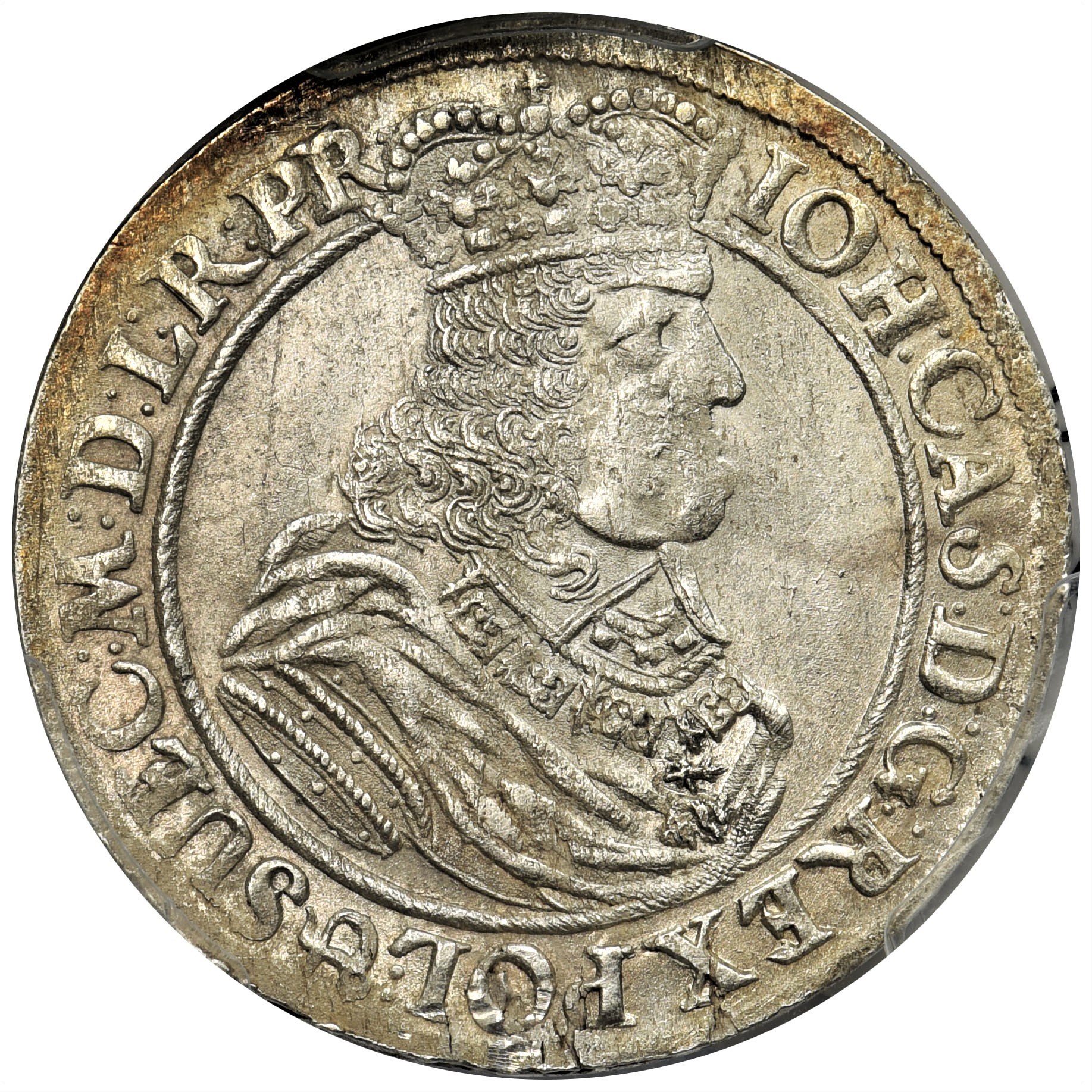
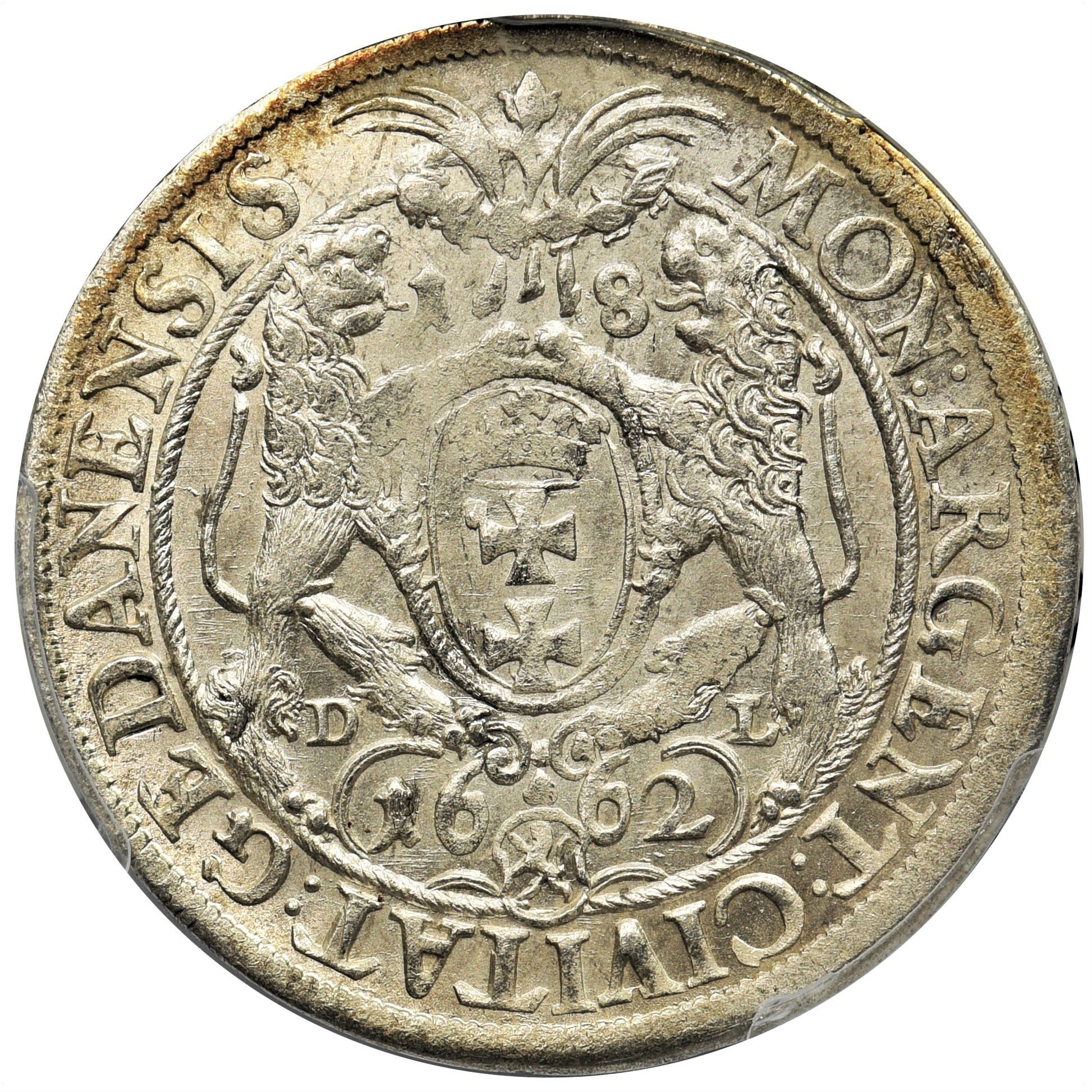
At this point, time is catching up with us, we move on to Toruń.
The heyday of this mint coincided with the reign of John II Casimir, and minting of ort coins ceased even a year later than in Gdańsk; they were struck between 1650 and 1668, with only minor interruptions. Toruń's mints are distinguished from others by an elaborate angel holding the city's coat of arms—a truly beautiful piece:
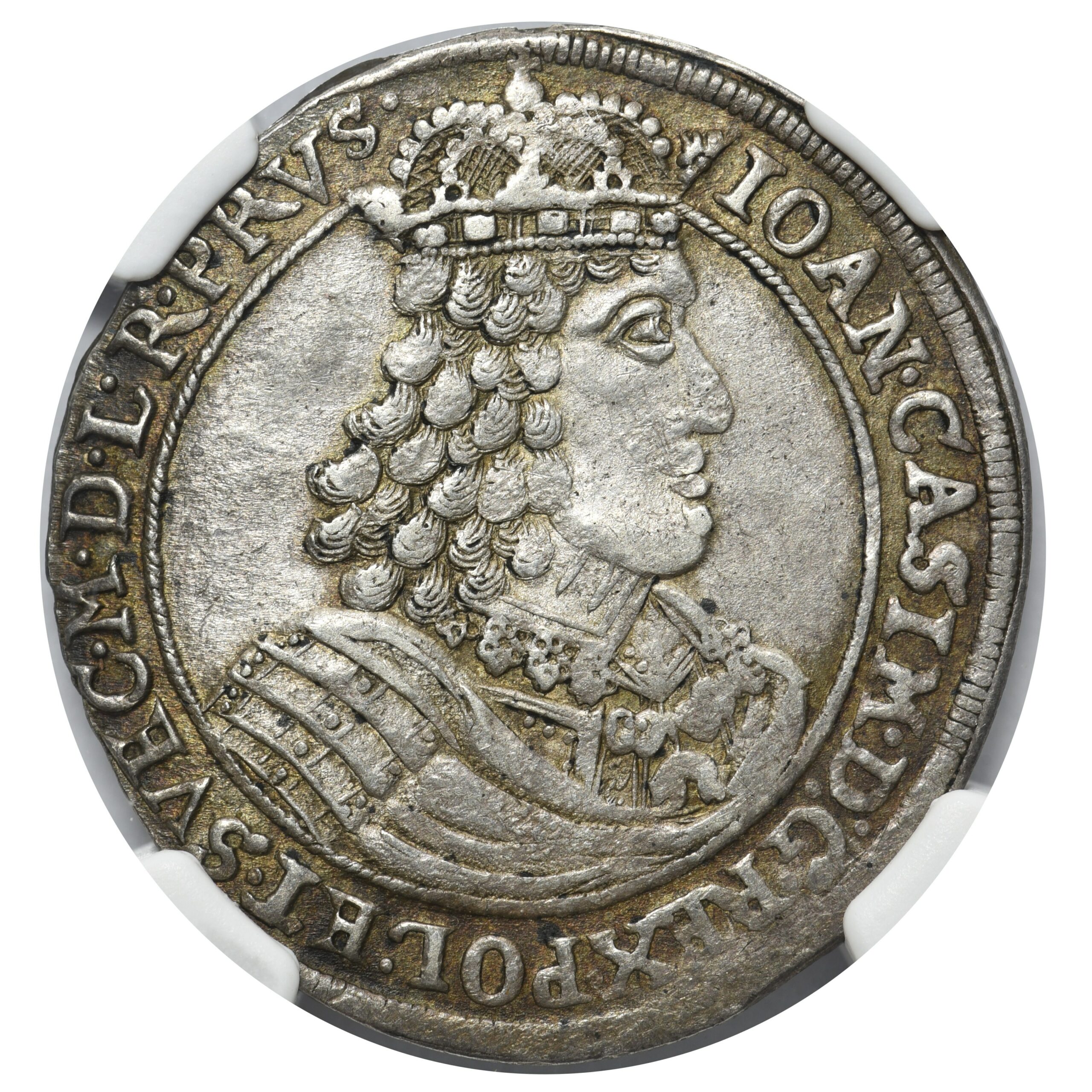
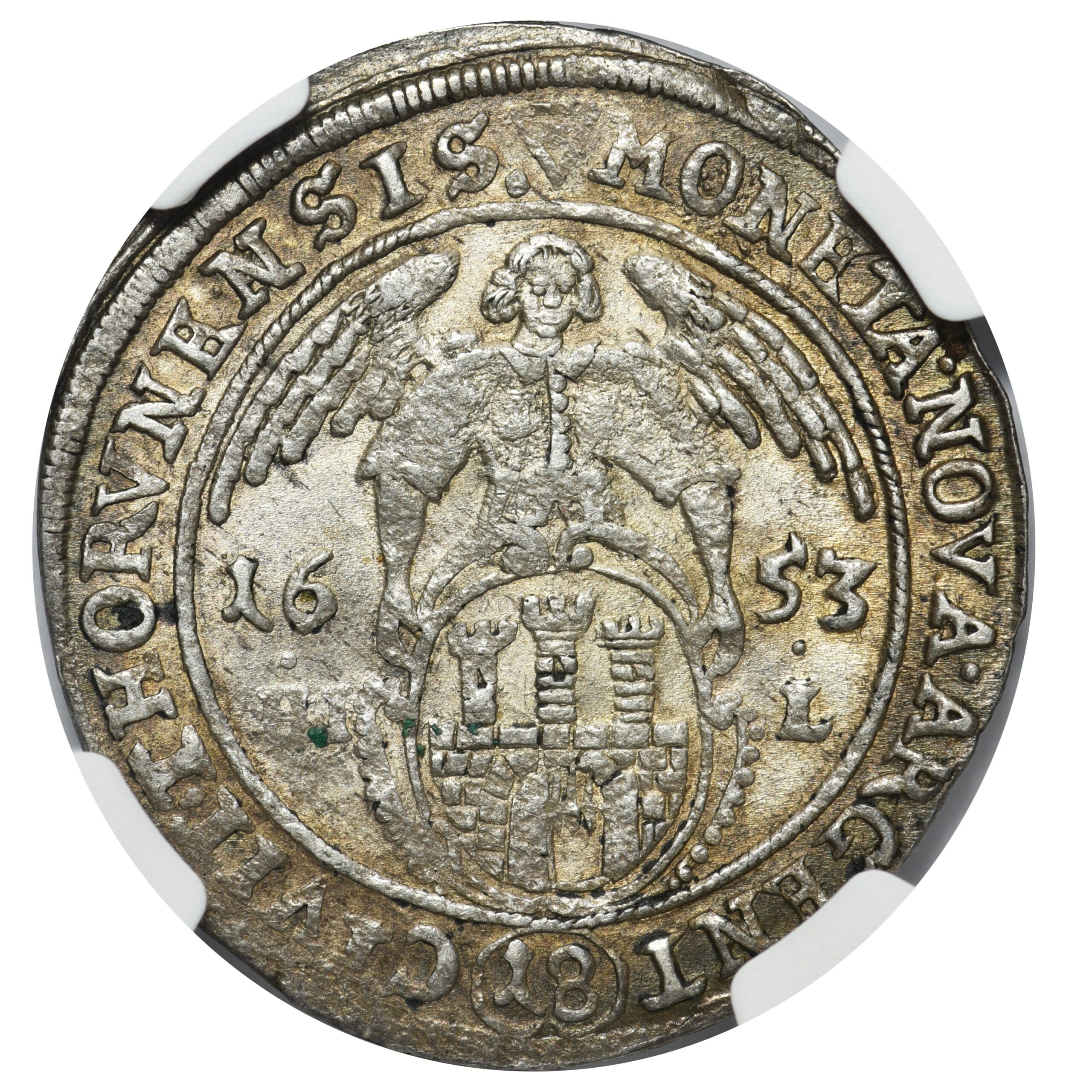
In the years 1655-58 the city was under Swedish occupation, which started an interesting chapter in Toruń's minting – occupation coinage, during these years occupation coins were minted with the image of the King of Sweden, Charles Gustav, on the obverse and three Swedish crowns with the denomination "XVIII" on the reverse, the coins were minted without dates.
Now we move smoothly to Elbląg. It is from this mint that the John Casimir ort coins are the rarest and most coveted by numismatists. Not counting the occupation years, which I will mention later, they were struck in 1650, 1651, 1660, 1661, 1662, 1665, 1666, and 1667. Each year is rare and commands high prices, but the former are perhaps the most interesting for collectors. Like Toruń, Elbląg fell under Swedish occupation, which lasted from 1655 to 1658 and yielded more ort coins than the 1626-35 period, when ort coins were minted from modified cylinders from the reign of Sigismund III (I forgot to mention them in the previous section, so I'll add J now).
Charles Gustav's occupation coins for the city of Elbląg were minted in 1656, 1657, and 1658, and most varieties are dated. A particularly interesting variety was minted undated in 1656 – it depicts not the Elbląg coat of arms, but the Swedish lion. This completes all of John Casimir's mints for the city of Elbląg, and with this, I will conclude the second part of this story about the coins; the next one will follow soon..
Wojciech Opioła

Copyright 2026
Design: Proformat
Copyright 2026
Design: Proformat - Interactive Agency
Wójcicki Polish Auction House
ul. Klemensa Janickiego 2b
50-157 Wrocław
tel.: 696 875 000
tel.: 71 30 70 111
e-mail: [email protected]