Przyjmujemy walory na XIX Aukcję PREMIUM - Termin przyjęć: 04.01.2027

18th Premium Auction · WÓJCICKI – Polish Auction House
Behind every collection lies an idea, years of searching and the personal interests of its creator. At our 18th Premium Auction, we will present four collections offering different perspectives on history — from portraits of ancient rulers and life in historic Lwów to the development of Polish paper money and the coinage of the Łódź ghetto.
We invite you to discover these collections and explore the items in our catalogue.
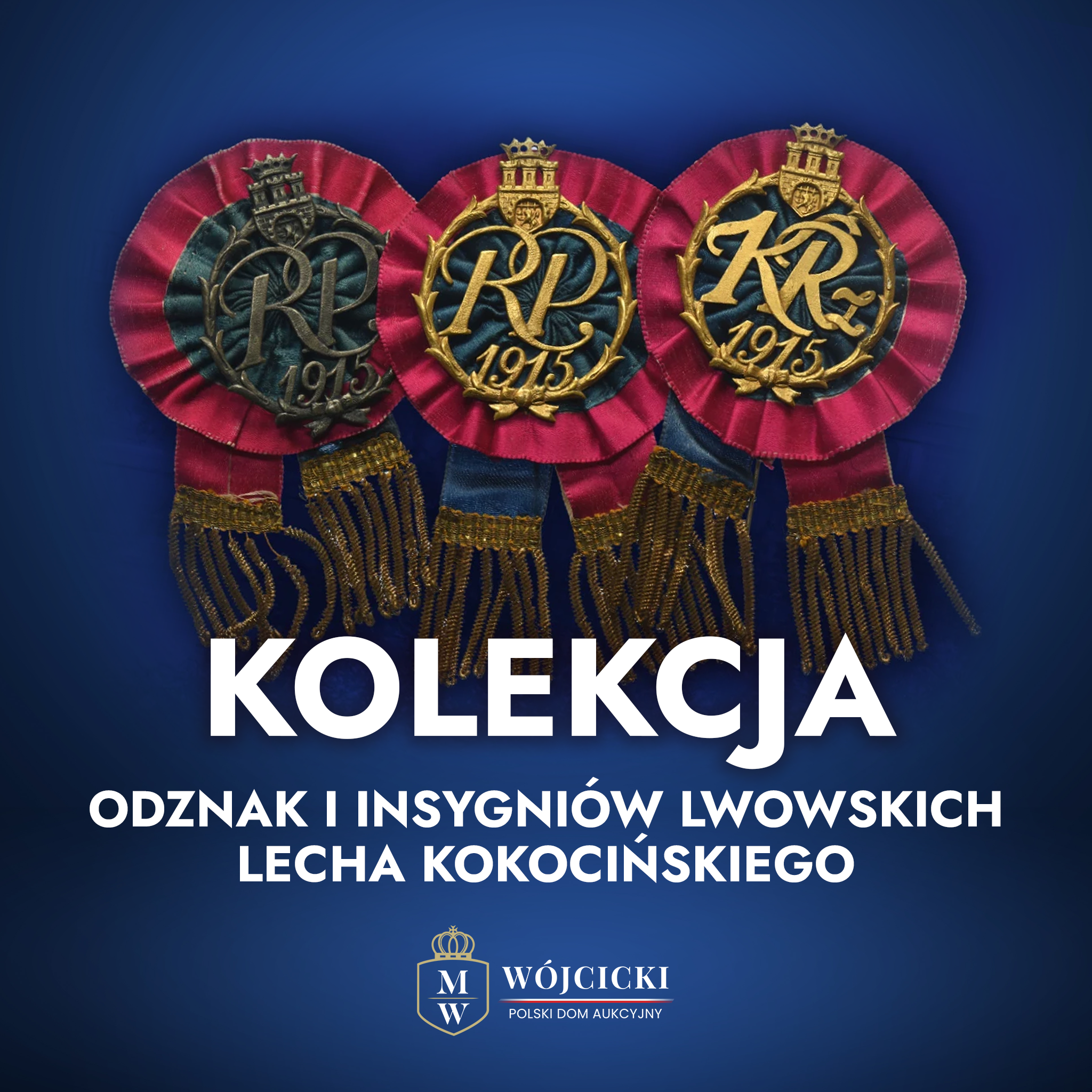
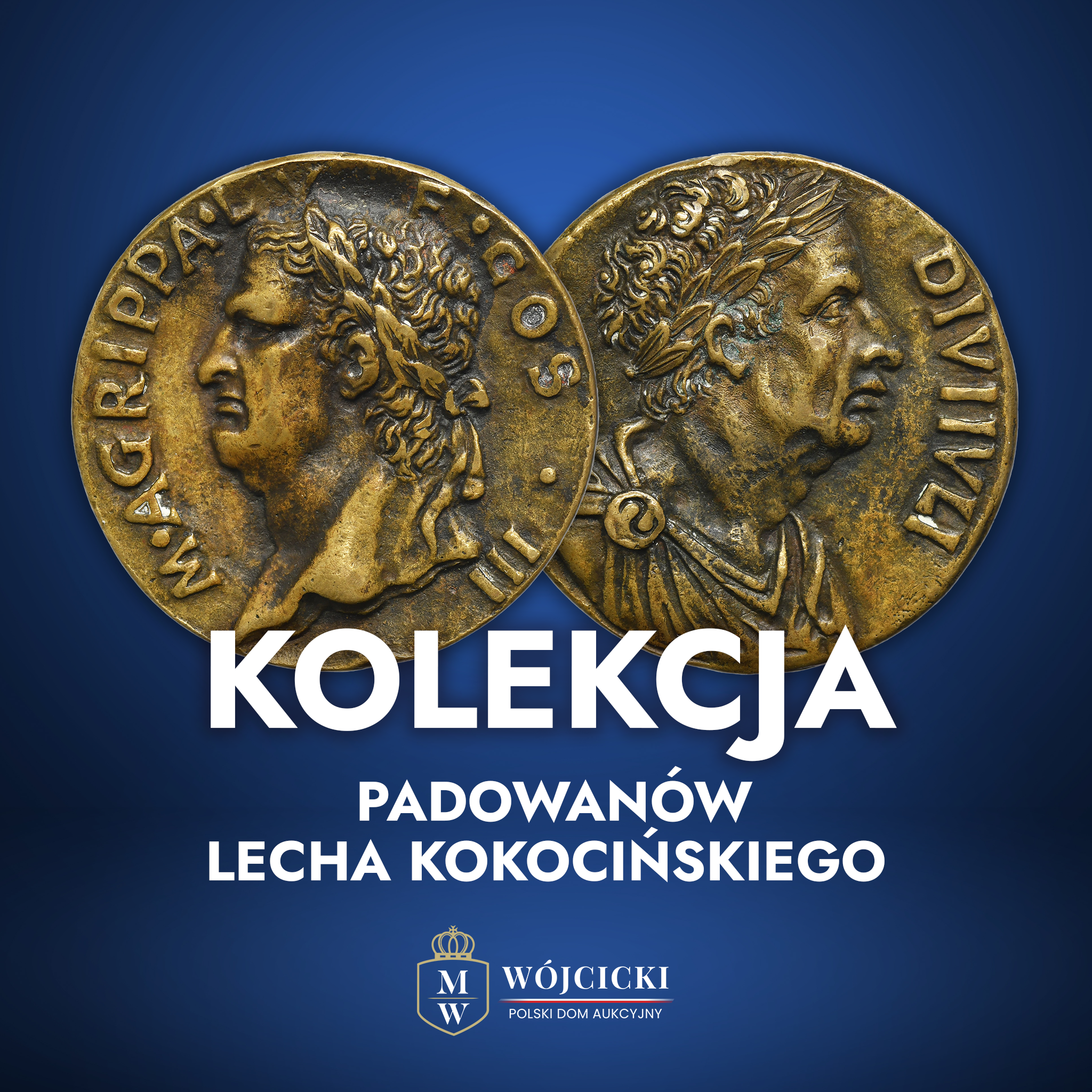
This collection comes from the holdings of Lech Kokociński, a distinguished Polish lawyer, collector, bibliophile and researcher who has been associated with the numismatic community for decades. It reflects the remarkable breadth of his interests, encompassing medals, phaleristics, Renaissance medallic art and the coinage of the ancient world.
The collection of badges and insignia from Lwów holds a special place. It was founded on the collection of Rudolf Mękicki, an art historian, museologist and curator at the King John III Sobieski National Museum in Lwów. Acquired together with its surviving documentation, it was subsequently expanded by Lech Kokociński over more than half a century. Badges of social, professional, sporting, academic and paramilitary organisations create a multifaceted picture of life in historic Lwów and Galicia.
The second part comprises medals, plaquettes, medallions, tokens and devotional medals — objects that are both works of art and tangible records of people, events and institutions. In the current auction catalogue, the section associated with the collections of Lech Kokociński and Karol Jabłoński comprises 117 lots, including historical and sporting medals, plaquettes, and objects with practical or commemorative functions.
A separate group consists of Paduans, Renaissance and later imitations of ancient coins traditionally associated with Giovanni da Cavino and the circle of Paduan medallists. The collection invites us to view them as works of art in their own right, reflecting the Renaissance reception of antiquity and documenting how artists and collectors of the period interpreted the art of ancient Rome.
The final part is a collection of ancient coins encompassing Greek, provincial and imperial coinage. It was assembled with an emphasis on the history, iconography and diversity of ancient money, rather than simply as a sequence of coin types.
Taken together, these holdings reflect many years of collecting guided by a distinctly scholarly approach, in which every object forms part of a wider story of history, art and memory.
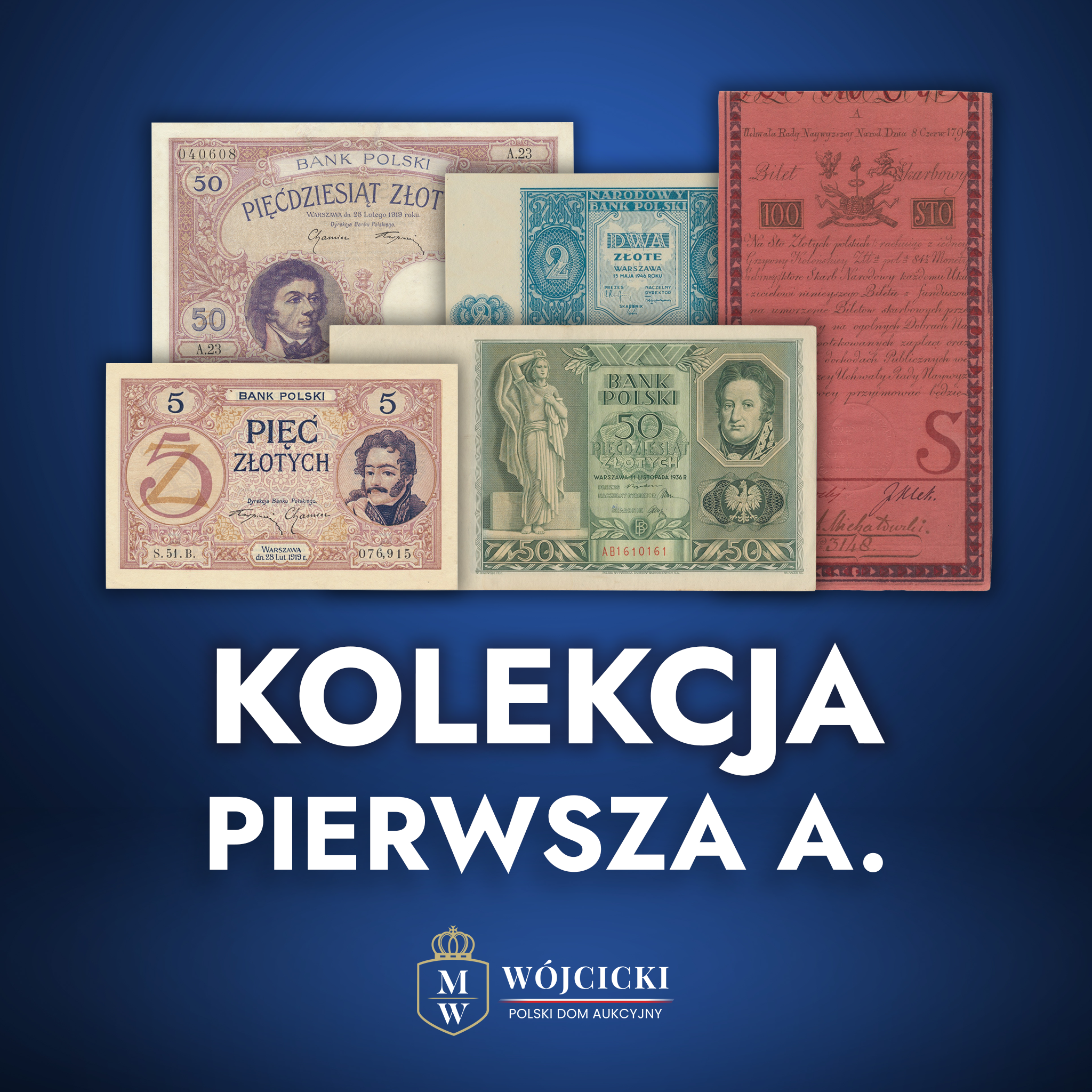
The Pierwsza A. Collection is a carefully assembled collection of Polish paper money spanning more than two centuries of history, from the issues of the Kościuszko Uprising of 1794 through notes of the Duchy of Warsaw, Polish marks, the currency of the Second Polish Republic and the occupation period, to the issues of post-war Poland and the Third Polish Republic.
Of particular significance are the earliest Polish banknotes associated with the Kościuszko Uprising. The collection includes both notes of the Directorate of Treasury Notes dated 8 June 1794 and small-denomination notes of the September issue, representing various denominations, series and watermark varieties. They are tangible records of Poland’s first attempt to introduce state-issued paper money, undertaken amid the dramatic struggle to preserve its independence.
Further sections document the major transformations of the Polish monetary system: the re-establishment of a national currency after 1916, inflation of the Polish mark, the złoty reform, the use of money under occupation and the post-war restructuring of currency circulation. These are complemented by later circulation issues, autographed banknotes and items associated with Poland in the late twentieth century.
In its present offering, the Pierwsza A. Collection comprises 164 lots. Its appeal lies not only in its chronological breadth but also in the inclusion of interesting varieties, serial numbering, watermarks and printing variants. The collection presents Polish paper money as a record of statehood, shaped by changes in borders, political regimes and economic systems, yet consistently present in the daily lives of successive generations.
It offers opportunities both for advanced collectors seeking specific varieties and additions to their holdings, and for those wishing to begin their own journey through the history of Polish banknotes. The scope of the collection is documented in the catalogue of the 18th Auction, while an earlier part was presented separately as the Pierwsza A. Collection.
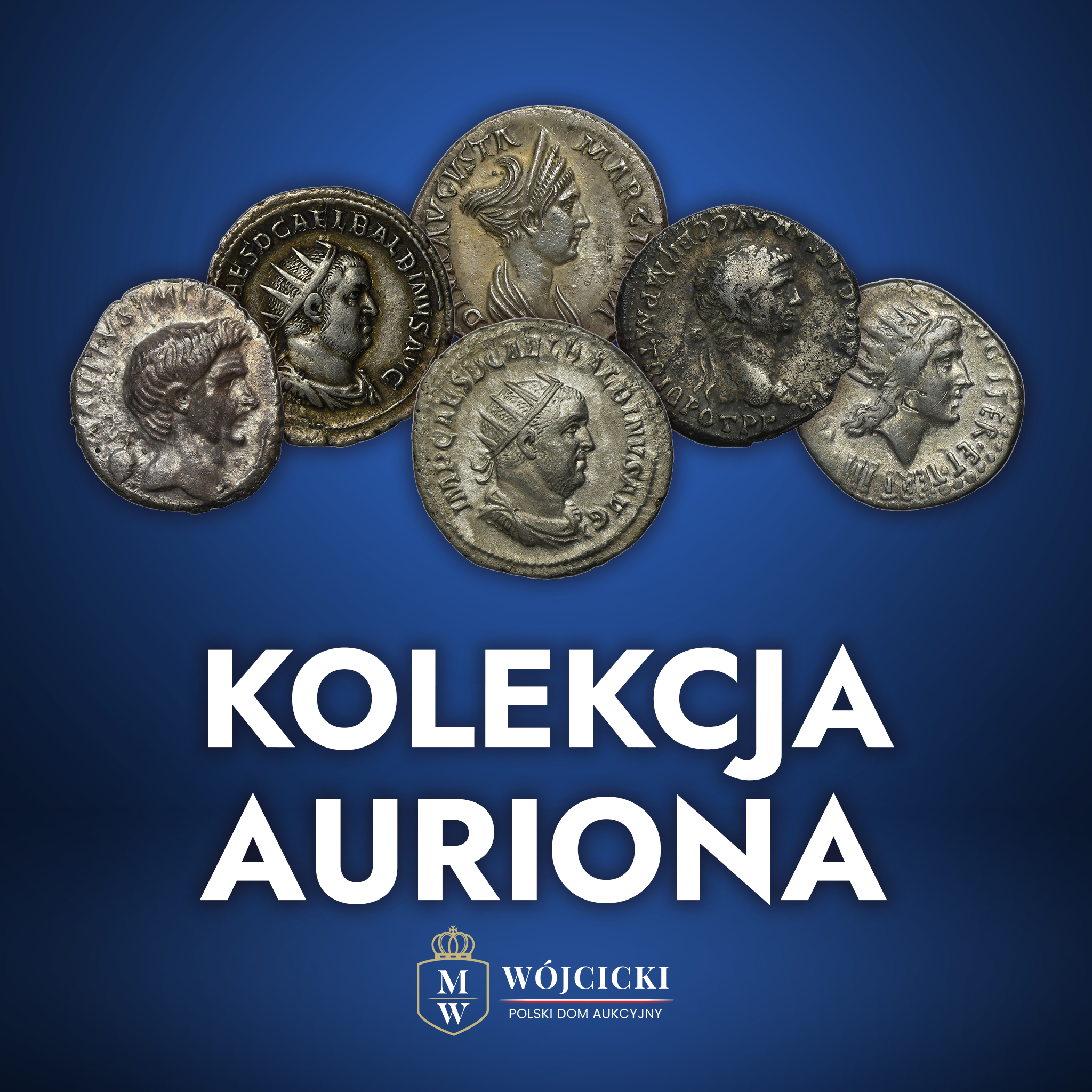
The Aurion Collection was formed with a clearly defined aim: to assemble coins of as many rulers of the ancient world as possible. Its primary purpose was not to seek only examples in high grades, but to create a broad and representative overview of those who held power across successive centuries.
The selection of coins was guided above all by dynastic and historical completeness. Individual examples bear witness to the reigns of emperors, usurpers, co-rulers, heirs to the throne and members of ruling families whose portraits and names were preserved on coins. Alongside widely recognised figures are short-lived rulers known for brief and turbulent reigns, as well as individuals less frequently represented in collections of ancient coins.
The varying condition of the coins is a natural consequence of this approach. For many rulers, particularly those who reigned briefly or during periods of political turmoil, the priority was to include a legible and correctly attributed example of their coinage. Representation of the issuing ruler therefore took precedence over the visual appeal of an individual specimen.
The Aurion Collection presents ancient history through portraits of those who held power. It allows us to trace dynastic succession, periods of stability, civil wars, usurpations and political change as reflected in small yet direct records of their time. Its greatest strengths are the breadth of its historical representation and the consistency with which the ambitious aim of assembling as complete a gallery of ancient rulers as possible was pursued.
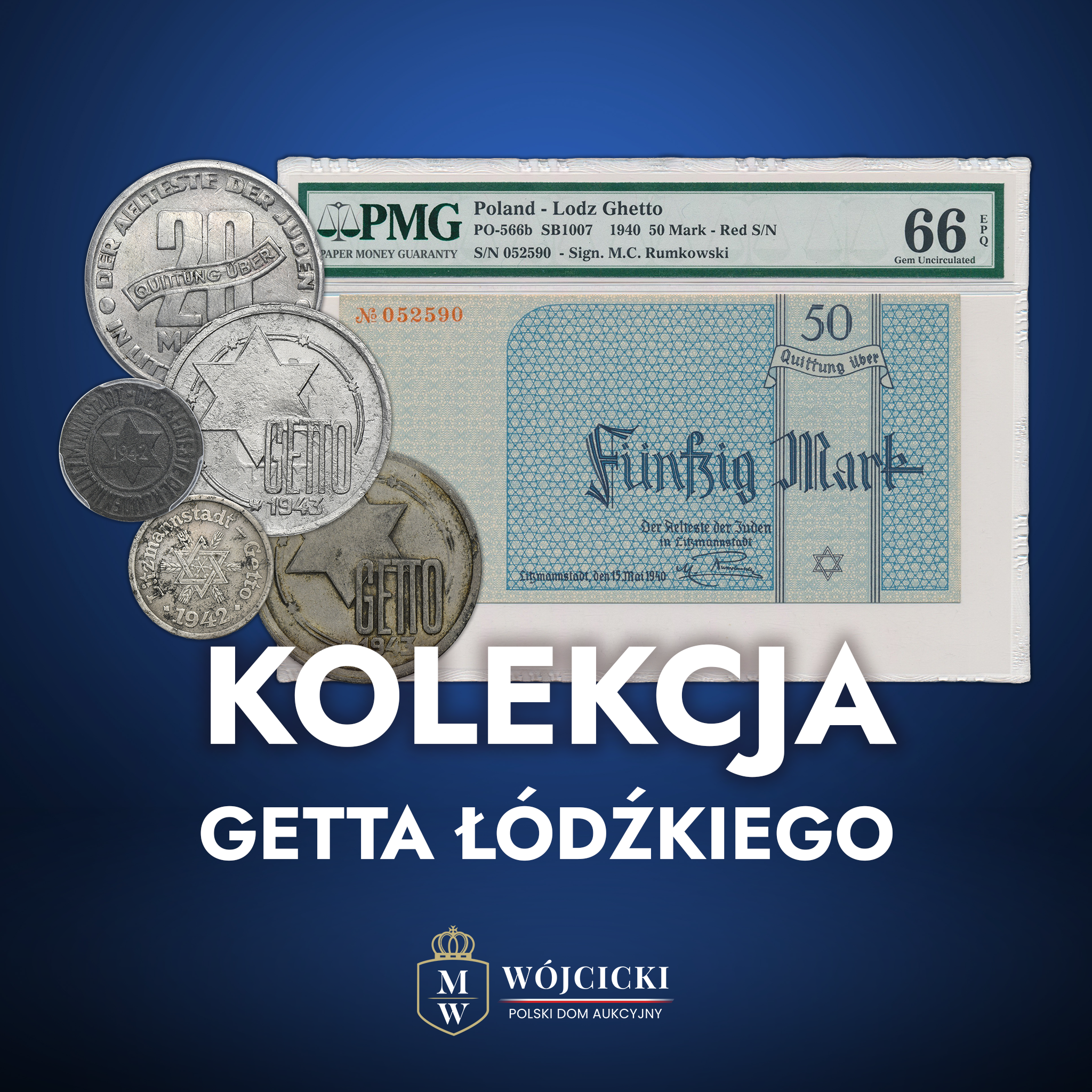
The Ghetto Collection is a specialist collection of coins issued for use in the enclosed Jewish district of Łódź, the Litzmannstadt Ghetto, between 1942 and 1944. Its purpose was not merely to assemble the individual denominations, but to document as comprehensively as possible the types and varieties found within them.
The collection includes coins denominated in 10 pfennig and 5, 10 and 20 marks. It illustrates the diversity of these issues, arising from differences in the metal used, die construction, the shape and arrangement of design elements, the forms of letters and numerals, and other sometimes subtle features that distinguish individual variants.
A particular strength of the collection is its consistent focus on varieties. The coins were assembled to provide material for comparing dies and tracing differences arising during successive stages of production. Alongside the basic types are variants of interest to advanced collectors, whose significance becomes apparent only through direct comparison of several examples of the same denomination.
These coins circulated exclusively within the ghetto and had no value beyond its boundaries. The internal monetary system was one of the instruments used to economically isolate and exploit the people confined there. Each example offered is therefore not only an object of numismatic study, but also a tangible witness to the tragic history of the Łódź ghetto.
The collection combines the historical significance of these issues with a specialist approach to their classification. Built around varieties, die details and production techniques, it demonstrates how extensive a subject the coinage of the Litzmannstadt Ghetto remains, and how much scope there is for further research.

Copyright 2026
Design: Proformat
Copyright 2026
Design: Proformat - Agencja interaktywna
Wójcicki Polski Dom Aukcyjny
ul. Klemensa Janickiego 2b
50-157 Wrocław
tel.: 696 875 000
tel.: 71 30 70 111
e-mail: [email protected]